Your Cart is Empty

Last Updated: October 26, 2026
Quick Summary
Chemical-free pet grooming is a labelling claim, not a regulated standard, so treat it as a starting point for reading the label rather than a guarantee. What owners actually want from chemical-free pet grooming supplies is a product free from ingredients that strip the skin barrier, trigger itching, or leave residue.
Chemical-free pet grooming is a labelling claim, not a regulated standard.
Water is a chemical, and so is the sodium in table salt. What owners actually want from chemical-free pet grooming supplies is a product free from ingredients that strip the skin barrier, trigger itching, or leave residue.
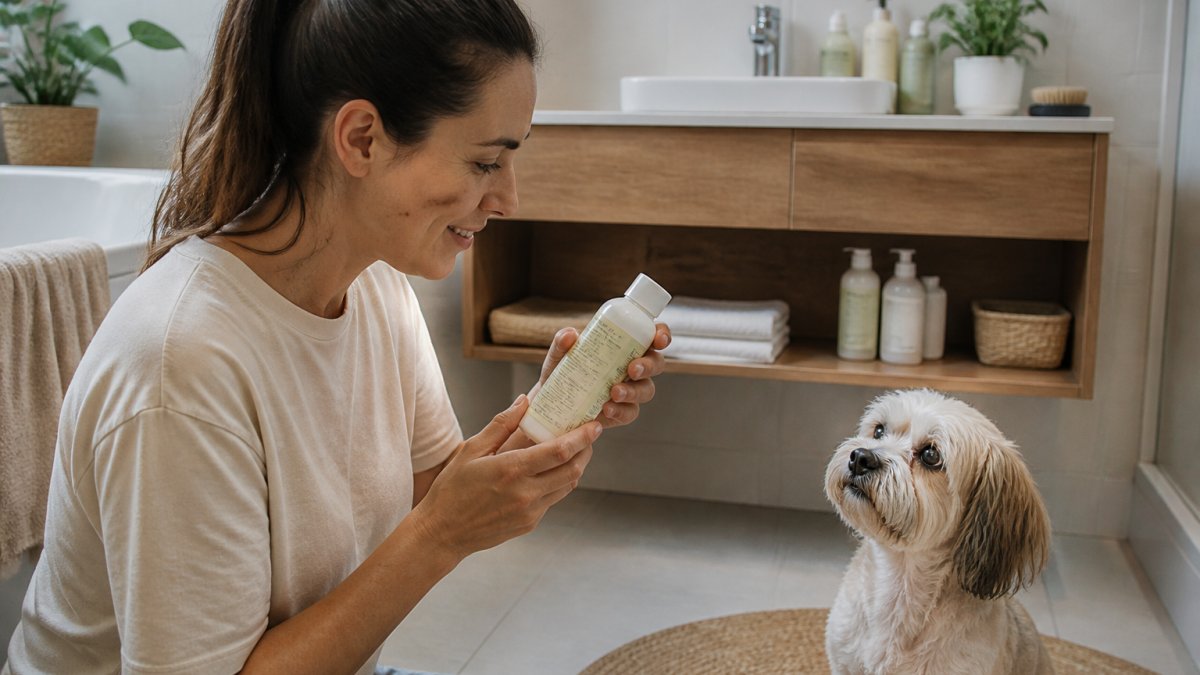
Ingredients appear in descending order of concentration, so the first five names tell you more than the marketing copy. Scan for the surfactant, the preservative, and the fragrance. If fragrance is listed only as "perfume" or "parfum," you cannot know what is in it.
A practical habit: photograph the label before you buy online, then check the full list on the product page. Reputable sellers publish the complete ingredient list rather than a highlights reel.
The ingredients worth avoiding in dog shampoo are those most likely to strip the skin barrier or trigger a reaction: sulphates such as SLS and SLES, synthetic fragrances, parabens, dyes, and preservatives such as methylisothiazolinone.
Sulphates create thick lather, which owners read as "clean," but a dog's skin sits at a different pH to human skin, and strong detergent leaves it dry and reactive.
A product can say "sulphate-free" and still contain a different anionic surfactant, or say "fragrance-free" while including a masking fragrance. The back label is where the truth sits. Look for these alternative names:
A practical habit: photograph the label before you buy online, then check the full list on the product page. Reputable sellers publish the complete ingredient list rather than a highlights reel. If a listing only says "natural extracts" without naming them, treat that as a warning sign.
In the UAE, pet grooming products are not regulated under a single dedicated "pet cosmetic" law the way human cosmetics are. Products sold locally generally fall under general consumer product safety expectations enforced by MoIAT and local municipal authorities, or, if marketed with therapeutic claims, under MoHAP rules for veterinary or medicinal products. The phrase "chemical-free" on a bottle is a marketing claim, not a certification.
When buying locally or ordering from abroad, check:
If your dog has already reacted to a product, recognising the warning signs of a harsh shampoo reaction helps you tell a mild irritation from something that needs a vet.
Our dog itch relief shampoo is built for this case: a deep-cleaning, plant-based formula designed to soothe itchy skin.
A word of honesty: no shampoo treats a skin infection, a parasite, or a food allergy.
Best for: dogs with dry, reactive skin and no diagnosed medical condition. Skip if: your dog has open sores, a suspected infection, or sudden hair loss.
Waterless dog shampoo earns its place between full baths, not instead of them.
The mistake owners make is using waterless products as a permanent substitute. Without water to flush residue away, repeated application leaves a film that dulls the coat and traps dirt.
For puppies and kittens, keep both the product and the water lukewarm, keep the session short, and use a tear-free wash around the face.
Pet grooming wipes cover the jobs a bath is too much effort for: muddy paws, a soiled rear end, tear stains, and a quick freshen-up before visitors.
Our natural grooming wipes for body and bum are made for this kind of on-the-go cleaning. Keep a pack by the door and one in the car.
Tear stains deserve their own note.
A gentle grooming routine is built on frequency, temperature, and dilution, not product strength. Bathe most dogs every three to four weeks, brush two to three times a week, and wipe paws and rear end daily. Lukewarm water, thorough rinsing, and a full dry are the steps owners skip most often.
| Task | Frequency | What to Use | Common Mistake |
|---|---|---|---|
| Brushing | 2-3 times weekly | Brush or steel comb matched to coat | Brushing a dry, matted coat |
| Full bath | Every 3-4 weeks | Gentle plant-based shampoo | Water too hot, rinse too short |
| Paw and bum wipe | Daily | Alcohol-free grooming wipes | Rubbing instead of wiping |
| Tear stain care | Daily | Soft wipe, separate cloth per eye | Sharing one wipe across both eyes |
| Waterless refresh | Between baths | Rinse-free shampoo | Using it instead of bathing |
The table above is a baseline. Coat type and skin condition change the numbers:
Before a full bath with a new product, apply a small amount behind the ear or on the inner thigh, rinse, and watch for redness or scratching over 24 to 48 hours. For concentrated shampoos, dilute per the bottle, typically one part shampoo to five to ten parts water, because undiluted product is harder to rinse out.
In hotter months, dogs spend more time indoors in air conditioning, which can dry the coat and skin. A gentle, fragrance-free shampoo and a daily wipe-down of paws and belly help. After outdoor walks, rinse paws to remove dust and salt rather than reaching for a full bath.
For a full walkthrough of the bathing steps, our guide to giving your dog the perfect bath at home covers water temperature, drying, and coat-specific handling.
If you want to see the plant-based formula that fits the chemical-free definition, our general purpose all natural dog shampoo is an everyday option for healthy coats.
Chemical-free is a marketing term, not a regulated certification. In practice, it usually means a product avoids synthetic fragrances, parabens, sulfates, and harsh preservatives. Always check the ingredient list rather than trusting the front label. Look for short ingredient lists with recognizable plant-based oils and gentle cleansers. If a product claims chemical-free but lists synthetic fragrance or sodium lauryl sulfate, the claim does not hold up.
Avoid parabens, sulfates (SLS/SLES), synthetic fragrance, phthalates, and artificial dyes. These can strip natural oils and trigger itching. Also watch for tea tree oil in high concentrations and any ingredient you cannot pronounce without a clear explanation. For sensitive dogs, choose fragrance-free or naturally scented formulas. If your dog has a known allergy, ask your vet before trying a new product.
Most natural products are safe for puppies over eight weeks, but always check the label for age guidance. Puppies have thinner skin and are more sensitive to essential oils, so choose mild, tear-free formulas. Avoid products with strong essential oils until your puppy is older. Introduce any new product with a small patch test on the back of the neck and watch for redness or scratching over 24 hours.
For sensitive skin, bathe every four to six weeks unless your vet advises otherwise. Over-bathing strips natural oils and worsens irritation. Use a gentle, chemical-free pet grooming shampoo and rinse thoroughly. Between baths, use pet grooming wipes or a waterless dog shampoo for spot cleaning. If itching persists after switching to a gentle routine, consult your vet to rule out allergies or skin infections.
Most grooming problems we hear about come down to the same three things: the wrong product for the skin, too much heat, or too little rinsing. StarDotHash supplies natural, plant-based grooming essentials across the region, including antibacterial shampoos, essential oil-based deodorizers, and tear stain wipes, with free shipping on orders over 100 AED. Get started with StarDotHash and build a grooming routine your pet actually tolerates.